FAQ Commissioner For Oaths
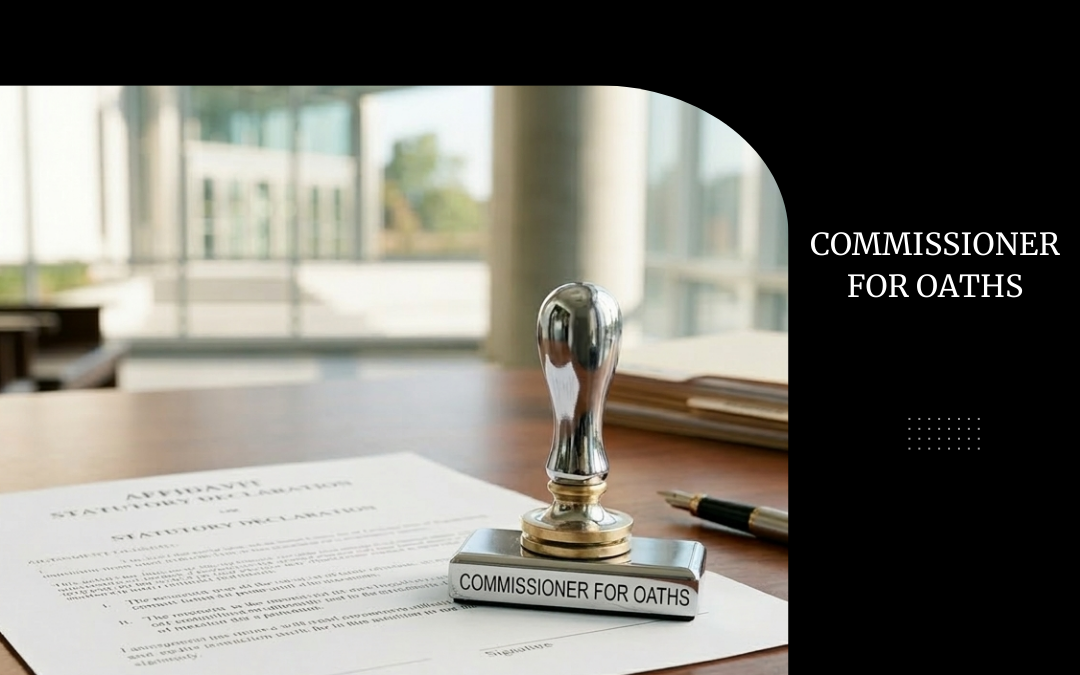
Commission For Oaths
What is the primary role of a Commissioner for Oaths?
A Commissioner for Oaths is authorized in Canada to administer oaths, affirmations, and declarations. The primary function is to verify and oversee the truthful signing of affidavits, statutory declarations, and other legal documents. By witnessing the signature and administering the oath, the Commissioner ensures that the document is signed truthfully under a formal pledge, making it a reliable and legally recognized record.
How does a Commissioner for Oaths differ from a Notary Public?
While both professionals can witness signatures, a Notary Public has a much broader range of responsibilities. In addition to the powers of a Commissioner, a Notary can certify true copies of documents and perform notarial acts that are recognized internationally. A Commissioner for Oaths is generally limited to the province or territory where they are appointed and cannot certify document copies or perform tasks recognized beyond provincial borders.
What is the difference between an oath and an affirmation?
An oath is a religious pledge, typically taken while holding a holy book, while an affirmation is a non-religious, solemn declaration of truth. Both carry the same legal weight and the same penalties for perjury if the statement is found to be false. A Commissioner for Oaths ensures that the individual chose the method most appropriate for their beliefs to guarantee the document’s validity.
Can a Commissioner for Oaths certify a "True Copy" of a document?
No. One of the key distinctions in Alberta is that a Commissioner for Oaths cannot certify or validate document copies (such as a passport or birth certificate). If the requirement is to prove that a photocopy is a true copy of an original, it is necessary to consult a Notary Public, who has the specific authority to perform that certification.
Which common documents can be commissioned in Alberta?
A Commissioner for Oaths is authorized to witness signatures for various provincial documents. These include statutory declarations, affidavits, property transfer declarations, insurance claim forms, and legal agreements requiring sworn statements. They are also vital for witnessing official documents intended for government or legal purposes within the province.
Are there documents that a Commissioner for Oaths cannot handle?
Yes. Certain documents fall outside the scope of a Commissioner’s authority. For example, documents related to wills, codicils, or powers of attorney often require legal advice or notarization by a lawyer or Notary Public. Additionally, documents intended for use outside of Alberta or international affidavits may need to be notarized to be legally valid in those jurisdictions.
Is the authority of a Commissioner for Oaths limited by geography?
Typically, the authority of a Commissioner for Oaths is limited to the province or territory of their appointment. For instance, an Alberta Commissioner is primarily authorized to administer oaths for documents intended for use within Alberta. If a document is intended for use in another province or abroad, a Notary Public would be the appropriate professional to consult to ensure international recognition.
Can a document be signed before meeting with the Commissioner?
No. It is a legal requirement that the individual signs the document in the presence of the Commissioner for Oaths. The Commissioner must personally witness the act of signing and administer the oath or affirmation at that exact time. If a document is signed beforehand, the individual may be asked to sign it again in the Commissioner’s presence to meet legal standards.
What is needed to prepare for a commissioning appointment?
To save time and avoid unnecessary delays, it is important to ensure that all documents are complete and correctly filled out before the meeting. However, the signature line must be left blank until the appointment. Additionally, the individual must provide valid, government-issued photo identification to verify their identity before the oath can be administered.
Is legal advice provided during the commissioning process?
No. A Commissioner for Oaths is authorized to witness and verify the execution of a document, but they do not provide legal advice or guidance on the legal effects of the statement being signed. For complex legal matters or specific guidance on the content of a document, it is always recommended to consult a lawyer or an appropriate legal professional.
This article is for general informational purposes only and is not legal advice. Contact us today to discuss your specific situation.

Our Location

Open Hours
Mon - Fri: 9am - 5pm Saturday: 1pm - 5pm Sunday: Closed